
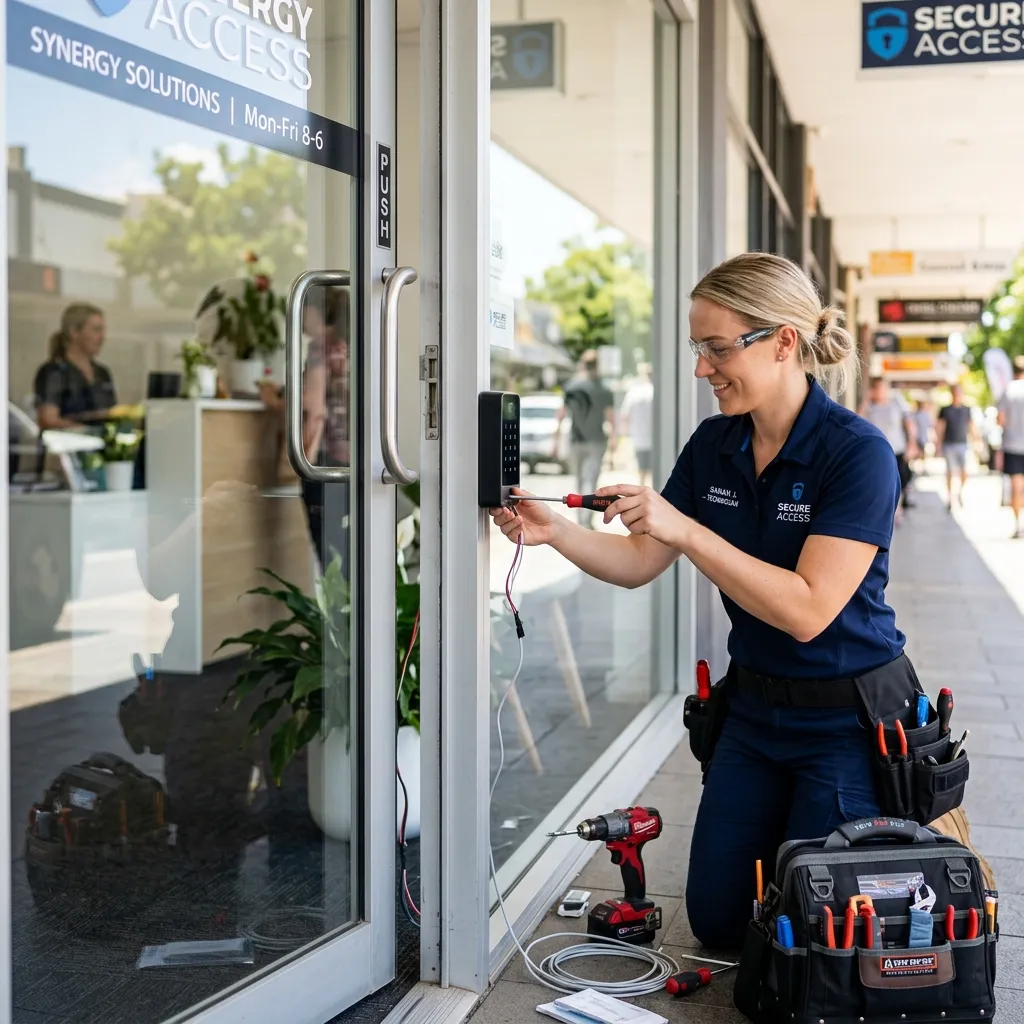
An intercom is useful only when staff can identify a visitor and the door can release, close and relock reliably. Businesses exploring commercial intercom installation in Burlington should design the visitor workflow before selecting screens, cameras or apps.
Map the visitor journey
Write down what happens from arrival to entry. Can the visitor find the call point? Which staff group answers? How is identity confirmed? Who releases the door when the usual receptionist is unavailable? What happens after hours?
Avoid creating a process where every call is released automatically. Technology should support a clear authorization decision.
Inspect the door and release hardware
The lock, latch, closer and frame must operate mechanically before an electric release is added. Confirm the door type, existing access control, fire and egress function, accessibility requirements and property-owner approval. A door that remains ajar defeats the intercom decision.
Discuss fail-safe and fail-secure behaviour with the appropriate life-safety requirements in mind. These terms describe power-loss behaviour; neither is universally correct for every opening.
Choose communication and network features
Compare local desk stations, mobile answering, video, directory management and integration with existing credentials. Cloud-connected systems need stable network service, protected administrator accounts and a plan for vendor outages. Wired and wireless components each have installation and maintenance tradeoffs.
Composite field lesson
This anonymized composite reflects common entrance planning. A business wants mobile video answering, but the existing door frequently fails to latch and several employees share one administrator login. Repairing the door and defining account ownership are prerequisites to dependable visitor control. No specific business or deployment is described.
Address privacy and administration
Decide what audio, video and entry data is collected, who can access it, and how long it is retained. Use individual administrator accounts and remove access promptly when roles change. Post any required notice and align settings with the organization’s privacy obligations.
Test normal and failure cases
Test visitor calls, door release, relocking, after-hours routing, power interruption, network loss and manual override. Document whom staff contact when a component fails.
The best system joins a reliable physical door with a simple, accountable visitor-approval process.
More Burlington locksmith resources
Start with our Burlington locksmith service guide for local coverage, service categories, and appointment preparation.