
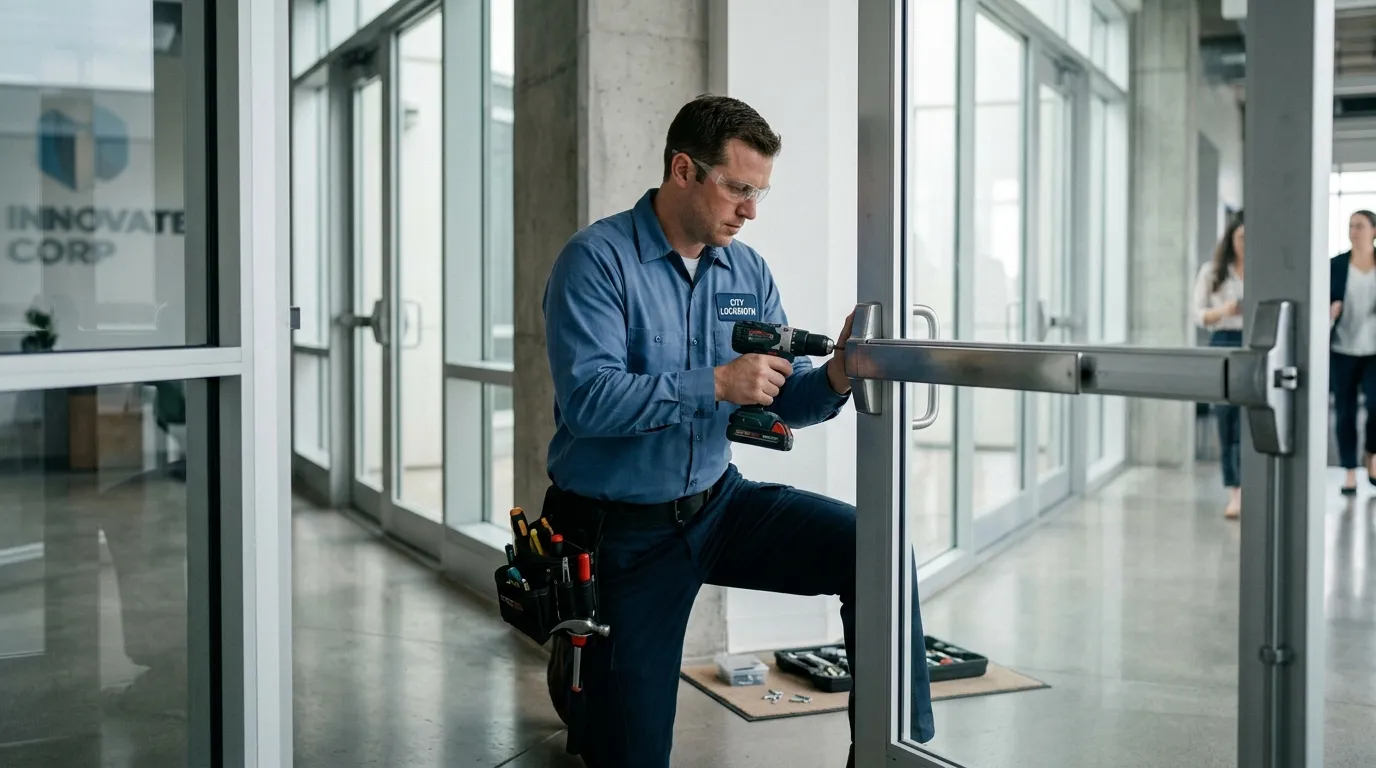
A business’s physical security is only as strong as its weakest point of entry. For retail stores, offices, and warehouses, the front door is the primary target for burglaries and break-in attempts. Storefront glass doors and commercial entries face distinct security challenges compared to standard residential doors.
Fortunately, there are several highly effective hardware upgrades you can install to reinforce your entryways and deter break-ins. Here are five simple ways to secure your commercial doors.
1. Install a Latch Protector Guard
Many storefront doors feature an outward-swinging design, which exposes the latch bolt or lock cylinder. This vulnerability allows intruders to use pry bars or screwdrivers to force the latch open.
- The Fix: A compatible latch guard can shield access to the latch area and make some prying attacks more difficult. Its coverage and mounting method must suit the door, frame, swing, lock, and required clearances.
2. Upgrade to High-Security Cylinders
Standard commercial cylinders can be picked, bumped, or drilled out relatively quickly by experienced intruders.
- The Fix: Compare compatible higher-security cylinders by their documented resistance features and key-control program. Sidebar mechanisms, hardened components, restricted blanks, and duplicate-authorization rules vary by product and may change over time.
3. Retrofit a Heavy-Duty Door Closer
An open door is a security breach. Winds, heavy customer traffic, or improper adjustments can prevent a commercial door from latching shut completely.
- The Fix: A correctly selected and adjusted door closer can help control movement and return the door toward the latch. It cannot guarantee that a door closes or locks; alignment, wind, seals, hinges, latch hardware, accessibility settings, and maintenance also affect operation.
4. Reinforce Hinges with Security Studs
Some outward-swinging doors have externally accessible hinge pins. Where the leaf and frame design allow it, removing an unprotected pin may create an attack path on the hinge side.
- The Fix: Re-hinge your entryways using hinges with non-removable pins (NRP) or security studs. When the door is closed, a metal stud locks the hinge plates together, keeping the door secure even if the external pin is cut.
5. Add a Security Grille or Folding Gate
For some retail stores or glass-front entries, a properly designed secondary barrier can add visible deterrence and delay after-hours entry.
- The Fix: A side-folding grille or other approved barrier can create a secondary layer that may delay entry after glass failure. It must not obstruct required egress, accessibility, sprinkler coverage, or other life-safety functions.
Partnering with a Commercial Locksmith
Ontario projects may be affected by the Ontario Building Code, Ontario Fire Code, AODA requirements and standards, municipal requirements, the approved fire-safety plan, and the door assembly’s listing. The U.S. ADA is not the governing Ontario accessibility law. Before modifying an entrance or exit, have the proposed work reviewed by the property authority and an appropriate door-hardware, fire-safety, accessibility, or building-code professional. A locksmith can address hardware within that approved scope but cannot by that fact alone certify overall code compliance.
Need Professional Locksmith Help in the GTA?
iProtect Locksmith is a mobile locksmith service serving homes, vehicles, businesses, and property managers across the GTA. We discuss available options and estimated pricing before work begins.
If you are locked out, need locks changed, or want to upgrade your security, call our dispatch line (8 AM to 10 PM) at 📞 437-295-4001 for a fast, reliable mobile response.