
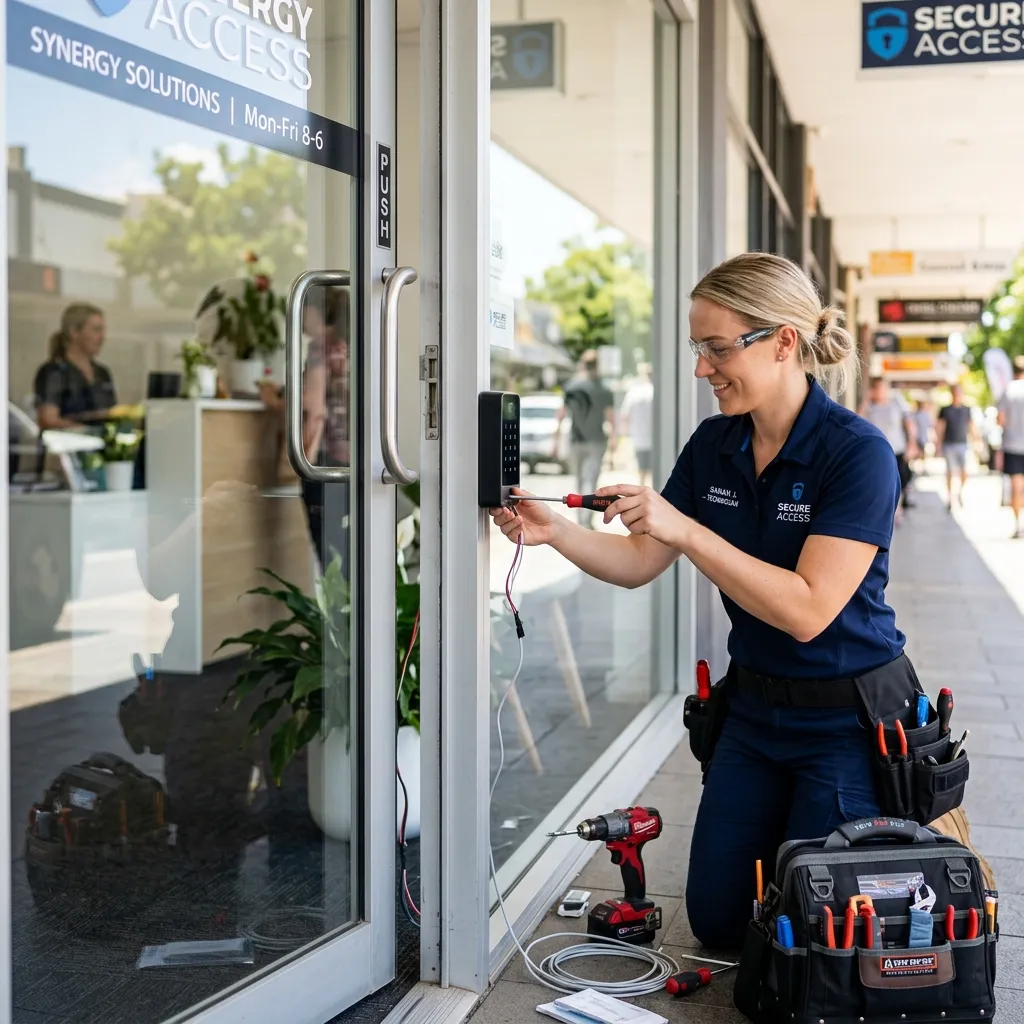
Access control is most useful when it solves a defined people-and-door problem. Before requesting access control system installation in Mississauga, map who needs access, where they need it, and who will maintain the system after installation.
Begin with roles, not products
List the groups that use the premises: owners, employees, cleaners, contractors, delivery staff and property management. For each group, decide which doors they may use and during what hours. This prevents buying a sophisticated platform that still relies on informal code sharing.
Then identify the offboarding process. A fob or credential should be removable without affecting everyone else. Shared PINs are simple, but they are difficult to trace and often remain active after staff changes.
Survey each controlled opening
An access reader is only one part of the system. Door material, existing lock, latch, closer, frame condition, fire rating and egress hardware determine which electrified hardware is appropriate. A door that does not close and latch mechanically will not become reliable when electronics are added.
Record whether the building owner must approve wiring or hardware changes. Also confirm power availability, network requirements and where controllers can be protected from tampering.
Compare practical credential choices
- Fobs or cards are easy to issue and revoke but must be inventoried.
- Mobile credentials reduce physical tokens but depend on supported phones and account management.
- Individual PINs can suit occasional users if they are unique and changed promptly.
- Mechanical keys may remain necessary for override, service and emergency procedures.
Ask what happens during power, internet or cloud-service interruption. The desired fail-safe or fail-secure behaviour depends on the door’s purpose and applicable life-safety requirements.
Composite field lesson
This anonymized composite reflects common small-office planning. A business wants one keypad on the front door, but staff also use a shared rear entrance and a restricted stock room. Mapping the actual workflow reveals that credential roles and reliable door closing matter more than adding a single visible reader. No specific business or installation is represented.
Plan administration before launch
Assign responsibility for adding users, removing access, reviewing events, replacing lost credentials and testing backup entry. Document the process in plain language. An access-control system is an operating practice as much as a set of devices.
A concise door schedule and user-role list will make vendor proposals easier to compare and reduce avoidable changes later.
More Mississauga locksmith resources
Start with our Mississauga locksmith service guide for local coverage, service categories, and appointment preparation.