
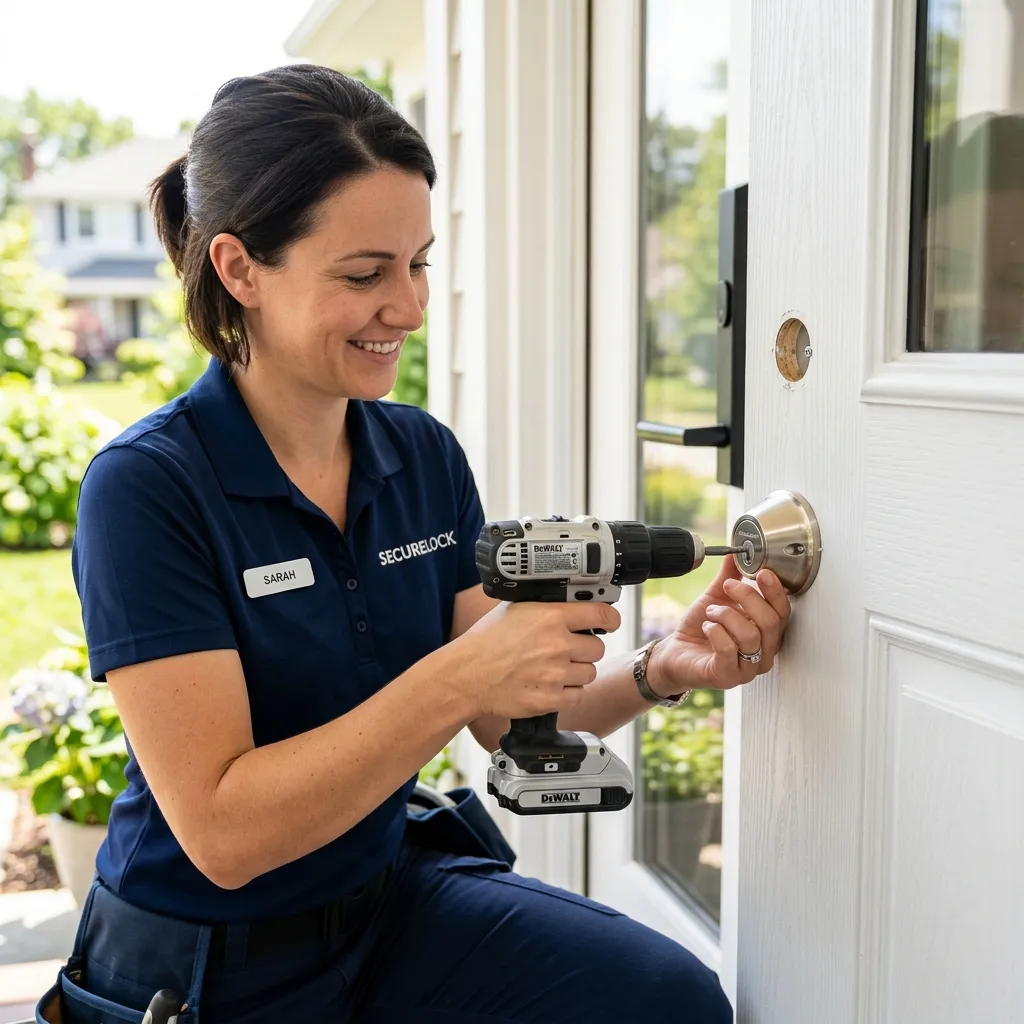
Older Brampton streets, including many in Bramalea and Peel Village, have doors that have been in place for decades. Each winter, some of them start to misbehave. The key gets stiff, the bolt does not reach the strike, or the door needs a push to close. It is tempting to blame the lock, and often the lock is fine.
Wood and metal move with the weather
Wood doors and frames swell with moisture and shrink in dry cold. Steel doors expand and contract too, and the frame they sit in moves at a different rate. A door that latched perfectly in August can rub or miss by a few millimetres in January. The bolt then hits the edge of the strike opening rather than sliding into it.
A simple test
Close the door slowly and watch the bolt as it reaches the strike. If the bolt lines up and the key turns freely when the door is open but not when it is closed, the door and frame are misaligned. If the key is stiff even when the door is open, the cylinder may be dirty or worn, or the lock may be frozen.
What you can try
Clear ice and snow from the strike and threshold. Check that the hinge screws are tight, because a loose top hinge lets the door sag. A small amount of graphite or a dry lock lubricant can help a stiff cylinder. Do not use oil-based sprays, which can attract dust and gum up the pins, and do not pour hot water over a lock, since it can refreeze.
When to call
If the door needs force to latch, the strike shows fresh scratches from the bolt, or the deadbolt only works when you lift the door, you likely need an adjustment. Our door hinge repair and residential door repair services address alignment, and a lock change is worthwhile only if the lock itself is worn.
A note on security
A bolt that only partly engages gives false security. If your door cannot be locked properly, treat it as urgent, even if the house seems safe. See our Brampton page for how to reach us.
More Brampton locksmith resources
Start with our Brampton locksmith service guide for local coverage, service categories, and appointment preparation.